
After qualifying as a Chartered Accountant, many aim for a role in a corporate headquarters. It’s often seen as the primary career path.
However, an alternative path is often overlooked: plant finance. This role, also known as a Factory Controller or Operations Finance role, can offer accelerated skill development, greater operational impact, and significant savings potential.
This guide explores the Head Office vs Plant Finance comparison. We will cover the day-to-day responsibilities, skills acquired, career progression, and financial benefits of each path. By the end, you should have a much clearer picture to help you make a smart decision that could shape your entire career.
Understanding the head office finance role
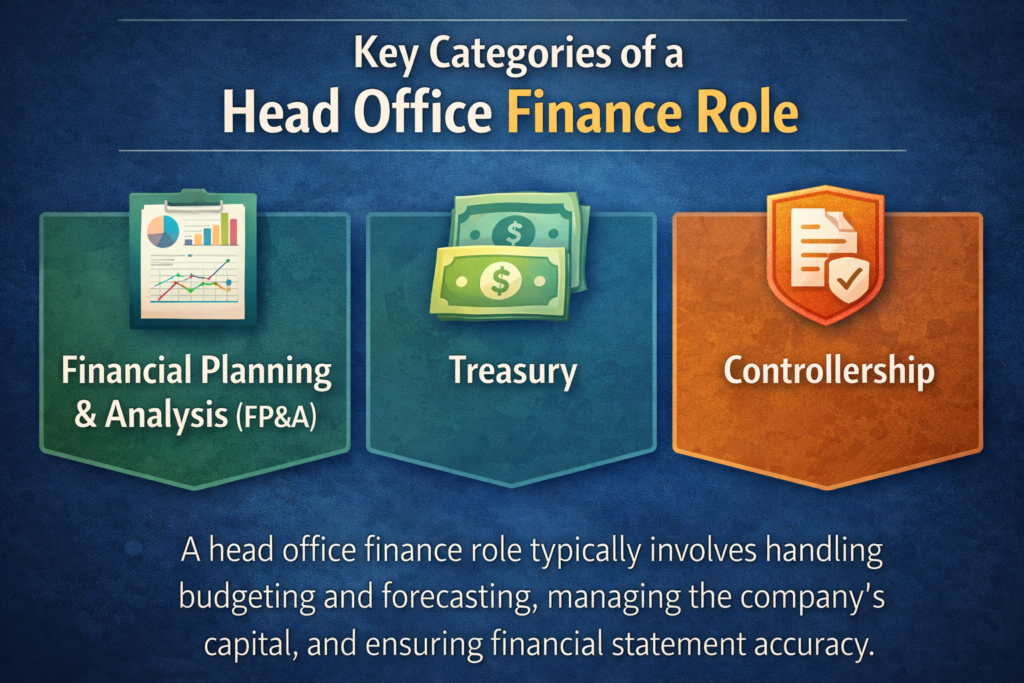
Think of a head office (HQ) finance job as the mission control for a company’s financial world. It’s where the big-picture strategy is created and managed. These roles usually fall into three main categories:
- Financial Planning & Analysis (FP&A): This is the team that looks ahead. They handle budgeting, forecasting, and analyzing company-wide performance to help the top brass make major decisions.
- Treasury: These are the cash experts. They manage the company’s capital, deal with banks, and make sure there’s always enough money on hand to keep the lights on.
- Controllership: This team is the guardian of the numbers. They lead the accounting department, make sure financial statements are accurate, and handle all the reporting and audits.
The work at HQ is often abstract. You’re dealing with consolidated data that comes in from all the different business units. It’s less about what’s happening on the ground and more about summarizing it from a distance.
The main advantage? You get a lot of visibility and direct contact with senior executives. As finance career experts at Mergers & Inquisitions point out, this can be great for networking and climbing the corporate ladder. In a nutshell, HQ finance is about analyzing what’s already happened and planning for the future from a 30,000-foot view.
Defining the plant finance role
A plant finance role, whether it’s called a Plant Controller or Operations Finance Manager, is the financial hub of a manufacturing facility. You’re not in a downtown skyscraper; you’re right where the products are actually being made.
A Plant Controller is a key part of the plant’s management team, acting as the translator between the operations folks on the factory floor and the finance team back at HQ. You turn the language of production into dollars and cents, and vice versa.
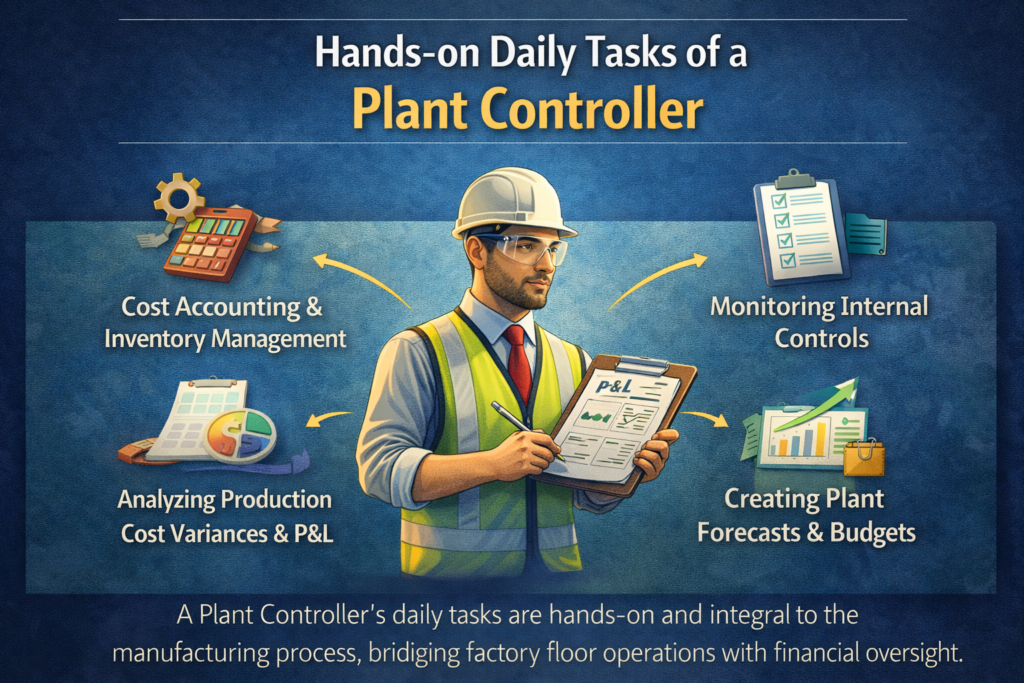
Your daily tasks are incredibly hands-on and connected to the physical business. You’ll be managing things like:
- Cost accounting and keeping tabs on inventory.
- Analyzing differences in production costs and preparing the plant’s own Profit & Loss (P&L) statement.
- Monitoring internal controls to protect company assets.
- Creating forecasts and budgets specifically for the plant.
- Estimating product costs to help the sales team create accurate quotes.
This is what you could call “tangible finance.” Instead of “inventory” being just a number on a spreadsheet, you can literally walk out onto the warehouse floor and see the pallets of materials and finished goods that your numbers represent. You’re not just reporting on the business; you’re part of it.
The day-to-day reality
The daily routine in these two places couldn’t be more different. The atmosphere, the tasks, and the people you work with all shape your experience and the skills you develop.
A day in the life at head office
Life at HQ is pretty much what you’d picture: structured, corporate, and centered around a computer. Your calendar is probably packed with meetings, and your days are spent in Excel, building presentations, and navigating large ERP systems.
The focus is on consolidation. You take reports from different divisions, roll them up into a bigger picture, explain what happened last quarter, and prepare forecasts for the next one. The work is important, but it can feel disconnected from the actual operations. You’re analyzing the ripples, not the rock that made them. As some industry experts point out, career progression can be influenced by visibility and interactions with senior leaders. Your main job is to report on what has already happened.
A day in the life at the plant
Plant finance offers a practical, hands-on application of financial skills. A plant controller’s day isn’t just spent at a desk. You’ll spend time on the production floor, wearing a hard hat and safety glasses, talking to engineers about a bottleneck on the assembly line, or watching raw materials become finished products.
It’s less about booking journal entries and more about using your financial skills to solve real-world problems. You’re analyzing production data, building cost models, finding ways to be more efficient, and helping department managers understand their numbers so they can improve their work.
Instead of just reporting on the past, your analysis directly shapes what happens tomorrow. You have a chance to drive real, measurable improvements to the bottom line from the ground up.
Career growth and skill development
Both paths can definitely lead to a senior leadership role, but they build very different skills at the start. Many experienced CFOs will tell you that a well-rounded background, especially one that begins in operations, is invaluable.
The corporate ladder: Visibility vs versatility
The head office path gives you a ton of visibility. You’re in front of senior management all the time, which can speed up promotions within the corporate structure. It’s a great place to learn about corporate governance, investor relations, and high-level strategy.
The plant finance path, however, builds incredible versatility. You’re not just “the finance person” or “the accountant.” You become a true business partner to the operations team. You learn the details of production, supply chain, and logistics.
Starting in operations finance gives you a solid foundation that makes you much more effective if you decide to move into a corporate role later. You’ll be the person in the room who can challenge assumptions because you’ve seen how things actually work. You understand the “why” behind the numbers, not just the “what.”
Check if your resume is ATS-friendly from our Resume Scorer.
Developing CEO-level skills: A breakdown
At HQ, you become an expert in financial reporting, consolidation, capital allocation, and strategic analysis. You learn how to take complex financial data and turn it into a clear story for executives and investors.
A plant finance role is a masterclass in one of the most important skills any CEO or CFO needs: cost optimization. You become a master of standard costing, variance analysis, supply chain finance, and operational efficiency. You don’t just report on profit; you learn how to actively find it, create it, and protect it. This is where you learn how a business truly makes money.
Here’s a look at how the primary skills compare, based on an analysis of job postings for financial controllers.
| Skill Area | Head Office Finance | Plant Finance |
|---|---|---|
| Core Function | Strategic Oversight & Reporting | Operational Control & Cost Management |
| Primary Skills | Financial Consolidation, FP&A, Treasury, Investor Relations | Cost Accounting (60%), Inventory/Cost Management, Variance Analysis, P&L Ownership, GAAP (20%) (Source: Franklin University) |
| Business Interaction | C-Suite, Divisional Heads | Plant Managers, Engineers, Supply Chain |
| Key Output | Board Decks, Consolidated Reports, Forecasts | Plant P&L, Cost-Saving Initiatives, Production Budgets |
| Mindset | Top-down (analyzing the results) | Bottom-up (influencing the results) |
Lifestyle and financial considerations
A job is more than what you do from 9 to 5. It affects your lifestyle and your ability to build wealth. This is one area where the two paths really split.
Work environment and culture
The culture at a head office is typically what you’d expect: formal, structured, and located in a major city. The dress code is business casual or formal, and the interactions are generally pretty polished.
A plant environment is often more informal and direct.
It’s rewarding because you’re working side-by-side with a diverse group of people, from engineers with PhDs to the folks on the production line. There’s a sense of teamwork and a shared goal of making and shipping a physical product.
The financial upside of plant finance
A key differentiator in the Head Office vs Plant Finance discussion is the potential for savings. While the base salaries for entry-level HQ and plant roles might look similar, the savings in a plant role is often much higher. This is because of two main things:
- Lower Cost of Living: Manufacturing plants are rarely in the downtown core of expensive cities. They are often in smaller cities or towns where the cost of housing, transportation, and everything else is much lower. For example, the World Resources Institute notes that most new renewable energy facilities are built in rural areas, creating high-paying jobs outside of major cities. A six-figure salary goes a lot further when your rent is half of what it would be in a big city.
- Company Perks: It’s common for manufacturing companies to offer nice perks for plant-based roles to attract good people. These can include generous housing allowances, a company vehicle, or heavily subsidized living arrangements.
When you’re looking at your options, don’t just compare the base salaries. A plant role in a lower-cost area could easily double or triple your savings rate, helping you reach your financial goals much faster.
You can calculate your take-home potential with our Salary Estimator tool to see the real financial impact.
Choosing your career foundation
When we look at the Head Office vs Plant Finance debate, there’s no single right answer. A head office role is a great way to understand corporate strategy and get high-level exposure. It’s a solid, traditional path.
However, a plant finance role offers something different: a hands-on, operational experience that teaches you how a business really works. It’s a masterclass in cost optimization and a chance to directly impact the bottom line. On top of that, the financial advantage of a higher savings potential can be a huge boost to your personal wealth.
The choice isn’t about which role is “better,” but which foundation you want to build your career on first. Starting on the ground floor as a factory controller gives you an incredible understanding of how a business creates value. It’s a perspective that will make you a more insightful and effective leader, no matter where your career takes you. For CAs focused on long-term growth and building real wealth, a factory role is a strategic investment in your future.
Also read: Cracking the 2026 Finance Excel Interview Test: 5 Formulas You Must Know
Frequently Asked Questions
Q.1 What are the main differences in daily tasks between head office and plant finance?
A1: In a head office, your day is typically focused on data consolidation, financial reporting, and strategic planning from a high level. In plant finance, your tasks are more hands-on and operational, involving cost accounting, inventory management, and working directly with production teams on the factory floor to improve efficiency.
Q.2 For a newly qualified CA, which path offers better long-term career growth?
A2: Both paths can lead to senior roles like CFO. The head office path offers faster visibility to senior leadership, while the plant finance path builds a strong operational foundation in cost management and business partnership. Many executives find that starting in a plant role provides invaluable experience that makes them more effective leaders later on.
Q.3 How does savings potential differ between head office and plant finance roles?
A3: While base salaries might be similar, the savings potential in plant finance is often significantly higher. This is due to manufacturing plants typically being located in areas with a lower cost of living, combined with company perks like housing allowances or company vehicles, which are more common for plant roles.
Q.4 What key skills do you develop in a plant role versus a head office role?
A4: A plant role provides a masterclass in cost optimization, variance analysis, and supply chain finance. You gain a deep, practical understanding of how a business makes money from the ground up, skills that are highly valued in any senior leadership position but are harder to learn in a purely corporate reporting role.
Q.5 Is it a good strategy to switch from a plant role to a head office role later?
A5: Absolutely. Moving from a plant role to a head office role is a common and highly effective career strategy. The operational experience you gain makes you a much more insightful finance professional at the corporate level because you understand the “why” behind the numbers, not just the “what.”
Q.6 Which role is better for seeing a tangible impact from your work?
A6: If you want to see a direct and measurable impact, a plant finance role is usually more satisfying. Your analysis and recommendations can lead to immediate changes on the production line, saving the company money and improving efficiency in ways you can see and quantify.