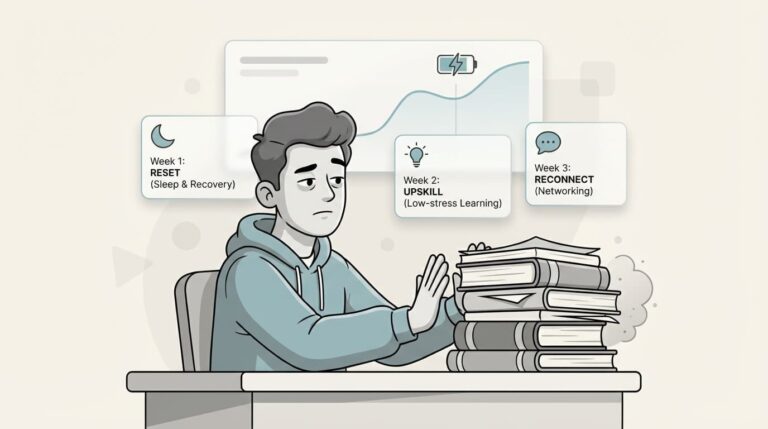
The exam hall door closes behind you, and for the first time in months, there’s silence. The constant pressure, the 12-hour study days, and the endless revision cycle are all over. But instead of relief, you might feel a strange kind of emptiness. That is “productivity guilt.” After running a marathon at full speed, suddenly stopping feels wrong, and the anxiety about results starts to creep in.
If you’re feeling a bit lost, you’re not alone. This is a super common experience for CA students. The good news is, there’s a way to navigate this weird in-between phase. This post lays out a simple, 3-week plan to help you recover from burnout, hit the reset button on your mental health, and gently start thinking about what’s next for your career.
Think of this as a detox plan, not to add more pressure, but to help you recover in a healthy, gradual way.
What is post-exam CA student burnout?
It’s easy to think burnout is just about being really, really tired. But it’s more than that. It’s a deep exhaustion that is emotional, physical, and mental, which comes from being under intense stress for way too long. The main difference is that with normal stress, you can usually see a finish line. With burnout, it can feel endless.
And it’s a huge problem. A 2019 report from the American College Health Association found that a whopping 87.4% of students felt overwhelmed by everything they had to do. Even more concerning, 45.1% felt so depressed that it was difficult to function.
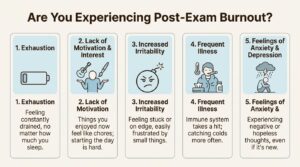
So, how do you know if you’re dealing with it? Here are a few common warning signs to look out for:
- Exhaustion: You feel completely drained, like your battery is at zero, no matter how much you sleep.
- Lack of motivation & interest: Things you used to enjoy now feel like a chore, and just starting your day feels like a massive effort.
- Increased irritability: You might feel “stuck” or on edge, and small things can set you off or make you feel frustrated.
- Frequent illness: Your immune system takes a hit when you’re burnt out. You might find yourself catching every cold that goes around or dealing with nagging digestive issues.
- Feelings of anxiety & depression: You might start having negative or hopeless thoughts, even if that’s not something you’ve experienced before.
Your 3-week detox plan for CA students
This isn’t about just lying on the couch for three weeks (though some of that is definitely encouraged). This plan is designed to ease you back into a normal routine by focusing on one key area each week. It’s about active recovery, helping you move from feeling completely fried to feeling ready for whatever comes next.
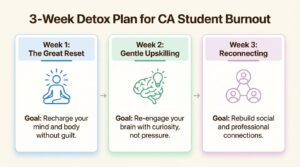
Here’s a quick look at the plan:
| Week | Primary Focus | Goal |
|---|---|---|
| Week 1 | The Great Reset | Recharge your mind and body without guilt. |
| Week 2 | Gentle Upskilling | Re-engage your brain with curiosity, not pressure. |
| Week 3 | Reconnecting | Rebuild social and professional connections. |
Week 1: The great reset (Sleep & pure recovery)
The ‘Why’: The first week is all about tackling the physical and mental toll of your exam prep. Your brain is fried, and your body is probably running on fumes. There’s this idea called Attention Restoration Theory, which says that simply spending time in nature can help you recover from mental fatigue and restore your ability to focus. Think of this week as repaying your “sleep debt” and letting your mind heal.
The ‘How’ (Actionable Steps):
- Put away the books: Seriously. Find a box, a closet, or a high shelf and put all your study materials out of sight. This simple physical act sends a powerful signal to your brain that the marathon is officially over and it’s time to rest.
- Fix your sleep schedule: For months, your sleep was probably all over the place. Now’s the time to get back into a healthy rhythm. Aim for a solid 7-9 hours of consistent sleep each night. Try to go to bed and wake up around the same time every day. And please, put your phone away at least an hour before bed. The blue light messes with your sleep cycle.
- Get into nature: You don’t need to suddenly start training for a 10k. Research shows that gentle outdoor activity, like a simple walk in a park, is more restorative than exercising indoors and can really bring down stress levels. Leave your headphones at home and just pay attention to your surroundings.
- Practice mindfulness: Your mind has been racing for months, so it’s natural to feel anxious when it’s suddenly quiet. It’s a great tool to fight off that “productivity guilt” and resist the urge to fill every quiet moment with something “useful.”
Week 2: Gentle upskilling (Low-stress learning)
The ‘Why’: After a week of pure rest, you might find your brain getting a little restless. This week is about channeling that energy into something positive and productive, but without any of the pressure of exams. This isn’t about cramming for another test; it’s about exploring your interests and building confidence. Think of it as taking out some “career insurance” by exploring your options and adding a few new skills to your toolkit.
The ‘How’ (Actionable Steps):
- Explore adjacent interests: Think about skills that would be a great complement to your CA qualification. This is your chance to learn something you’re genuinely curious about. You could dive into the basics of a data visualization tool or take an introductory course on financial modeling. The goal is to learn for fun, not for a grade.
- Assess your readiness calmly: The “what’s next?” anxiety is very real. It’s easy to get caught in a spiral of worry about articleship and job prospects. Instead of letting that anxiety build, you can take a small, concrete step to get some clarity. Now is the perfect time to get a clear, objective picture of where you stand.
Anxious about your articleship prospects or future career path? Instead of stressing, get data-driven clarity. Our Articleship Scorer is a simple, no-pressure tool designed to help you calmly assess your experience and identify areas for growth. It’s a great way to feel productive without the overwhelming pressure.
Week 3: Reconnecting with the world (Strategic networking)
The ‘Why’: Let’s be real, months of intense studying probably meant saying “no” to a lot of social events. Isolation is a common side effect of exam prep. This week is all about rebuilding those social and professional connections that may have been put on hold. This isn’t about awkwardly asking people for a job. It’s about learning from others, sharing experiences, and reminding yourself that you’re part of a bigger community.
The ‘How’ (Actionable Steps):
- Reconnect with peers: Reach out to the friends you were studying with. Grab a coffee, go for a walk, or just have a long phone call. Share what you’re going through, your anxieties, and your plans. You’ll probably discover that you’re all in the same boat, and there’s a lot of comfort in that.
- Schedule casual chats: Think of a few seniors or recently qualified CAs you admire. Drop them a polite message on LinkedIn or via email and ask if they’d be open to a quick 15-minute virtual chat. Don’t ask for a job. Instead, ask about their journey after they qualified. Most people are more than happy to share their story and offer advice.
- Attend online webinars or events: Look for free, low-commitment online events related to finance or accounting. It’s an easy way to dip your toes back into the professional world, learn about what’s happening in the industry, and feel connected again without any pressure.
- Spend time with non-CA friends: It’s so important to step outside the CA bubble. Reconnecting with friends and family who are in different fields can give you a much-needed reality check and perspective. It’s a great reminder that your entire identity isn’t tied to one exam result.
Pro tips for making your detox stick
Recovering from burnout isn’t something that happens overnight. Here are a few extra tips to help you stay on track and protect your mental well-being in the long run.
- Know that recovery isn’t a straight line: There will be good days where you feel energetic and optimistic, and there will be bad days where the anxiety creeps back in. That is completely normal. The goal here is progress, not perfection. Be kind to yourself on the tough days.
- Set boundaries: Your family and friends mean well, but the constant questions about when you’re going to “get a job” or “figure things out” can add a lot of unnecessary pressure. It’s okay to gently explain that you need some time to decompress and that you’ll focus on your career when you’re ready.
- Know when to say “no”: After being stuck in a rigid study schedule, it can be tempting to say “yes” to every single social invitation that comes your way. But be careful not to swing too far in the other direction. Learning to politely decline some plans is key to avoiding a different kind of burnout and making sure you don’t get overwhelmed all over again.
- Break large tasks into smaller chunks: If you do decide to start a new online course or a personal project, don’t try to tackle it all at once. Break it down into small steps. This makes the task feel less daunting and helps you build momentum one small win at a time.
- Seek professional help if needed: There is absolutely no shame in asking for help. If the feelings of anxiety or depression stick around and start to feel overwhelming, please consider speaking to a counselor or therapist. Your mental health is just as important as your physical health.
Planning your future after burnout
Getting over burnout isn’t a passive activity. It requires more than just waiting for time to pass; it requires a structured, intentional approach. This 3-week plan, built around rest, low-stress learning, and reconnection, gives you a clear path to follow, taking you from a state of exhaustion to a place of readiness.
Remember, the time you spend waiting for your results isn’t just an empty void. It’s a valuable opportunity to invest in your long-term well-being and build the resilience you’ll need for a successful and sustainable career.
Feeling anxious about what comes after your results? Take the first, stress-free step toward clarity. Use our Resume Scorer to understand your strengths and get a personalized readiness report.
Also read: How to Create an ATS Friendly CA Resume (5 Mistakes to Avoid)
Frequently Asked Questions
Q.1 How long does CA student burnout typically last after exams?
A: There’s no fixed timeline, as it varies for everyone. The 3-week plan in this guide is a good starting point, but recovery is a gradual process. The key is to focus on progress, not a deadline.
Q.2 Is it normal to feel unproductive and guilty after experiencing CA student burnout?
A: Absolutely. This feeling is often called “productivity guilt” and is a very common symptom of CA student burnout. After months of intense study, a sudden stop can feel unnatural, but it’s essential to give yourself permission to rest.
Q.3 What are the first steps I should take to recover from CA student burnout?
A: The first step is to acknowledge the burnout and prioritize rest. As outlined in Week 1 of our plan, focus on fixing your sleep schedule, disconnecting from study materials, and spending some time in nature to let your mind and body recover.
Q.4 Can CA student burnout affect my articleship or job prospects?
A: While severe, unaddressed CA student burnout can impact your motivation, taking proactive steps to recover can actually strengthen your career path. Using this time for gentle upskilling and networking (as suggested in Weeks 2 and 3) shows self-awareness and resilience, which are valuable traits to employers.
Q.5 When should I seek professional help for CA student burnout?
A: If feelings of anxiety, hopelessness, or depression persist for several weeks and interfere with your daily life, it’s a good idea to speak with a therapist or counselor. There is no shame in seeking professional support for your mental health.
Q.6 Besides rest, what are some productive things to do while recovering from CA student burnout?
A: Week 2 of the plan focuses on “gentle upskilling.” This involves exploring adjacent interests like data visualization or financial modeling without the pressure of exams. It’s a great way to re-engage your brain and build confidence while recovering from CA student burnout.