First off, congratulations. Seriously. Getting that interview call from a Big 4 firm is a huge deal, and you should take a moment to feel proud of yourself. I know exactly what you’re feeling right now: a wild mix of excitement and pure, stomach-churning anxiety. It’s completely normal. You’ve worked hard for this, and the finish line feels so close.
But here’s the reality check: the interview isn’t just a formality. Your resume, with its impressive articleship and academic record, got your foot in the door. Now, the behavioral round is where they decide if you’re someone they actually want to work with. This guide is here to help you with your Big 4 interview preparation. We’re going to skip the generic advice and focus on what actually works, based on the real experiences of CAs who have sat in that same chair and walked out with an offer.
What is a Big 4 behavioral interview?
Let’s clear this up right away. A behavioral interview is less about grilling you on IFRS or tax sections (they already assume you have the technical skills) and more about understanding who you are as a person. Firms like PwC and KPMG have built their interview process around these questions because they need to see if you’ll fit into their culture. They’re basically trying to predict your future behavior by looking at your past actions.
They’re trying to answer the questions that really matter for day-to-day work. Can you collaborate with a team when everyone is swamped and facing a deadline? How do you handle a client who is being difficult? Are you the kind of person your colleagues would want to be stuck with on a tough engagement that runs late into the night? At its core, they’re trying to figure out if you’re a good human being, not just a good accountant.
How we selected these questions
This list of questions isn’t just a random guess. We’ve put it together by sifting through feedback from hundreds of real Big 4 interviews. This includes insights from responses from graduates, deep dives into discussions on platforms like Glassdoor, and, most importantly, direct feedback from the many CA Monk students who have successfully landed offers at their dream firms.
The five questions you’re about to see were chosen for two simple reasons. First, they pop up constantly, across all the firms. Second, they are specifically designed to test the core skills that every single Big 4 firm cares about most: leadership, teamwork, problem-solving, integrity, and self-awareness. If you can nail your answers to these five, you’ll get the best possible return on your prep time.
Common types of Big 4 interview questions
Before we get into the specific questions, it helps to know the different categories they fall into. Here’s a quick look at the types of questions you’ll likely face and how you should think about them.
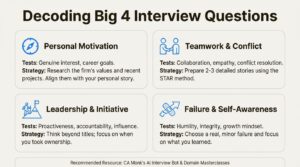
| Question Type | What It Actually Tests | Best Preparation Strategy | Recommended CA Monk Resource |
|---|---|---|---|
| Personal Motivation | Genuine interest, research, and career goals. | Research the firm’s specific values, recent projects, and align them with your story. | Gain deep industry context with our Domain-specific Masterclasses. |
| Teamwork & Conflict | Collaboration, empathy, and conflict resolution skills. | Prepare 2-3 detailed stories using the STAR method about team projects. | Practice your delivery and tone with our AI Interview Bot. |
| Leadership & Initiative | Proactiveness, accountability, and ability to influence others. | Think beyond formal titles. When did you take ownership of a task or improve a process? | Frame your resume to highlight leadership with our AI-powered Resume Scorer. |
| Failure & Self-Awareness | Humility, integrity, and a growth mindset. | Choose a real, minor failure and focus on what you learned from it. | Get comfortable answering tough questions in a safe, simulated environment. |
The top 5 questions you must prepare for
Alright, let’s get into the heart of it. Here are the five questions you absolutely have to be ready for.
1. “Tell me about yourself”
This sounds so simple, but it’s one of the most common questions asked, and it’s your first real chance to set the tone. It’s not just an icebreaker; it’s a test of your communication skills.
- Why they ask this: They want to see if you can tell your professional story clearly and compellingly. Can you connect the dots from your past experiences to this specific role? This is your opening pitch.
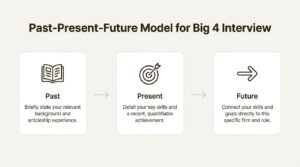
- How to structure your answer: Avoid rambling through your entire life story. Use the simple and effective “Past-Present-Future” model.
- Past: Start with a quick overview of your background. “I completed my articleship at XYZ & Co., where I focused mainly on statutory audits for clients in the manufacturing sector.” (1-2 sentences)
- Present: This is the core of your answer. Talk about your key skills and a recent achievement that proves them. “In my last role, I led the inventory audit for a major client and found a process inefficiency that saved them a lot of time during their quarterly closing. That experience really sharpened my analytical thinking and client communication skills.” (3-4 sentences)
- Future: Connect your story directly to the job you’re interviewing for. “I’m really excited about this opportunity in your advisory practice because it lines up perfectly with my goal of using my analytical skills to solve complex business problems, and I’ve always admired [Firm Name]’s work in the tech space.” (1-2 sentences)
- Past: Start with a quick overview of your background. “I completed my articleship at XYZ & Co., where I focused mainly on statutory audits for clients in the manufacturing sector.” (1-2 sentences)
A good answer is structured and links your personal drive to the role. If you’re even a little worried about how your CV is telling your story, running it through the CA Monk Resume Scorer can help you spot any gaps before the interviewer does.
2. “Why this firm?”
This is the “prove you’ve done your homework” question. A generic answer is one of the fastest ways to get rejected. They hear “I want to work for a Big 4” a hundred times a day. You have to do better.
- Why they ask this: They want to hire people who are genuinely interested in their firm and the specific service line. They’re looking for commitment, not just someone who wants a prestigious name on their resume. Candidates who have researched this often get positive feedback.
How to structure your answer: - For the firm: Go beyond their homepage. Find specific values, recent client work, or initiatives that you genuinely connect with. For example, you could mention how KPMG’s ‘Together’ value aligns with your collaborative style. Or you could talk about how PwC’s ‘Reimagining the possible’ value connects with your passion for using tech to improve financial processes.
- For the service line: Be specific about why this field interests you. If you’re applying for an audit, don’t just say you like numbers. Talk about the satisfaction of providing assurance to stakeholders or the investigative side of verifying financial statements. If it’s tax, maybe you’re fascinated by how tax strategy can impact a company’s global business.
3. Questions about team conflict
Teamwork is the lifeblood of any Big 4 firm. You’ll be working in teams from day one, so your ability to handle different personalities is a must-have, not a nice-to-have. This question is a staple, asked by all of the Big 4 firms.
- Why they ask this: They know conflicts are going to happen when smart, ambitious people work together under pressure. They don’t expect you to have avoided conflict your whole life. They want to see how you handle it, with maturity, professionalism, and a focus on the team’s goal.
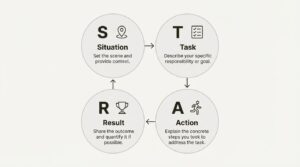
How to structure your answer (The STAR Method): This is where the STAR method becomes your best friend. It gives your story a clean, logical structure that interviewers love. For a great breakdown of this, see how to apply the STAR method effectively in consulting interviews, which is very similar.- S (Situation): Briefly set the scene. “During my articleship, I was on a five-person team working on a year-end audit for a major client. We were on a very tight deadline.”
- T (Task): Explain your role and what needs to be done. “My task was to reconcile the accounts receivable, but a senior on the team and I disagreed on the best way to verify a large, unusual transaction.”
- A (Action): This is the most important part. Describe the specific steps you took. “Instead of letting it become a bigger issue, I asked the senior if we could step aside for a few minutes. I listened to his concerns about the timeline and then calmly explained my reasoning, which was based on a new guidance note. We found a middle ground that satisfied both the deadline and the compliance rules.”
- R (Result): What was the outcome? “By dealing with it directly and respectfully, we not only solved the problem quickly but also ended up with a stronger working relationship. The audit partner was happy with our thoroughness, and we finished the engagement on time.”
- S (Situation): Briefly set the scene. “During my articleship, I was on a five-person team working on a year-end audit for a major client. We were on a very tight deadline.”
4. Questions about handling failure
This question feels like a trap, but it’s secretly a golden opportunity to show your character and integrity.
- Why they ask this: They are testing for three things: self-awareness, honesty, and a growth mindset. An interviewer knows that a candidate who claims they’ve never failed is either lying or completely lacks the self-awareness to see their own mistakes. Both are huge red flags.
- How to structure your answer:
- Acknowledge a real mistake. It should be a genuine error, but not something so terrible that it makes them question your basic competence.
- Take full ownership. Don’t make excuses or blame other people. “I made an error in a calculation that…” is much better than “The data was confusing, which led to an error…”
- Explain what you learned. This is the key. What insight did you gain from this experience?
- Detail the steps you took to improve. What system or process did you create to make sure this mistake wouldn’t happen again? As this interview coach explains, the goal is to turn a story of failure into a success story about your personal growth.
- Acknowledge a real mistake. It should be a genuine error, but not something so terrible that it makes them question your basic competence.
AI Interview Bot is so helpful. It gives you a safe space to practice your answer until it sounds authentic and confident, not defensive.”
5. “Do you have any questions for me?”
When the interviewer asks this, the interview is not over. This is your last chance to show you’re engaged and make a lasting positive impression.
- Why they ask this: This is a test of your curiosity and critical thinking. Did you just show up to answer questions, or have you thought deeply about what it would actually be like to work here? Your questions reveal your priorities and how interested you really are.
- What to ask: Always have 2-3 thoughtful, well-prepared questions ready.
- “What do you see as the biggest challenge for someone coming into this role in their first 90 days?” (Shows you’re thinking about hitting the ground running).
- “Could you share an example of a recent project the team is particularly proud of and what made it a success?” (Shows you’re interested in the team’s work and culture).
- “From your perspective, what do the most successful junior associates at [Firm Name] do differently than the average ones?” (This is a fantastic question to ask at an EY interview or any other Big 4 firm, as it shows you’re focused on excellence).
- “What do you see as the biggest challenge for someone coming into this role in their first 90 days?” (Shows you’re thinking about hitting the ground running).
A take on interviewing
It’s a vibe check, not just an exam. The partner or senior manager interviewing you is subconsciously asking one question: “Would I want to be stuck in an audit room with this person for 60 hours a week?” You need to be professional, but you also need to be a person they can have a normal conversation with. Being pleasant, curious, and personable is a massive advantage.
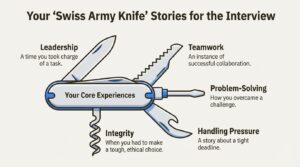
Have 5-6 “Swiss Army Knife” stories ready. Don’t try to prepare a unique story for 20 different potential questions. You’ll drive yourself nuts. Instead, prepare five or six solid examples from your articleship or college using the STAR method. These are your core stories. You can then adapt one of these stories to answer a question about leadership, another about teamwork, and maybe even another about handling pressure. It’s about being adaptable, not memorizing a script for every single possibility.
Don’t sound robotic. This is the biggest mistake. People over-prepare, memorize their answers word-for-word, and end up sounding like they’re reading a script. The goal is to have a conversation, not a speech. Use your prepared STAR stories as a framework, a set of talking points, not something you recite from memory. It’s okay to pause and think. It makes you sound more human.
Show, don’t just tell. This is the golden rule. Don’t say, “I’m a great team player.” Tell a story that proves you’re a great team player. Instead of saying, “I work well under pressure,” describe a specific situation where you successfully delivered a project with a tight deadline. The STAR method is your best friend here because it forces you to provide real evidence of your skills, which is so much more powerful than just listing adjectives.
Your next steps
Let’s bring it all home. Acing a Big 4 interview isn’t about having a magical, perfect answer for every question. It’s about doing the thoughtful prep work to understand what they’re really asking. It’s about crafting authentic stories that show off your skills and character. And it’s about walking into that room with the confidence to be the best version of yourself.
You have the potential, and now you have the playbook. The next step is to put this knowledge into practice.
If you’re ready to turn this guide into a job offer, the entire ecosystem at CA Monk is designed to get you there. From practical masterclasses that give you industry-specific knowledge to AI-powered tools that help you perfect your resume and interview delivery, we’re here to support you every step of the way. Your future is waiting.
Also read: 3-Week Detox Plan for CA Student Burnout